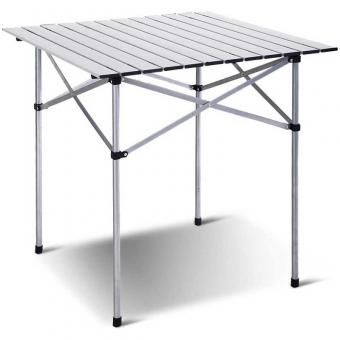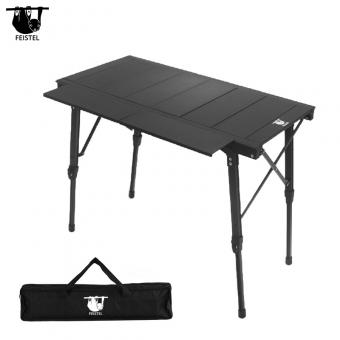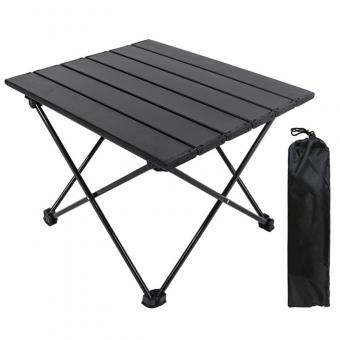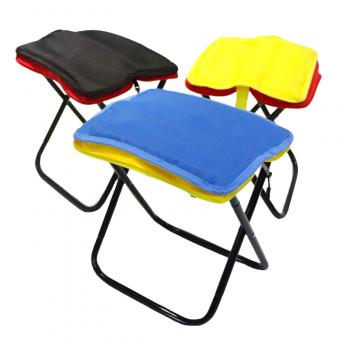
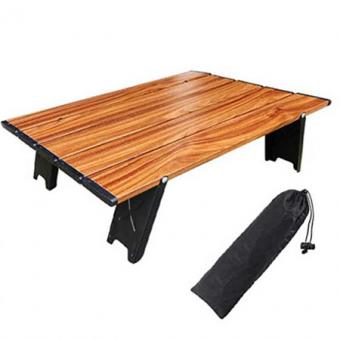
브랜드 : 안휘 FEISTEL 공장 관련제조 : OEM & ODM 상품명 : 야외활동에 적합한 가볍고 작은 접이식 피크닉 테이블입니다. 내구성이 뛰어난 소재로 제작되어 휴대가 간편하고 설치가 쉽습니다.
닐 우리 웹사이트에 오신 것을 환영합니다!
더 알아보기
 What Makes Beach Hammock Setup Different from Forest Camping
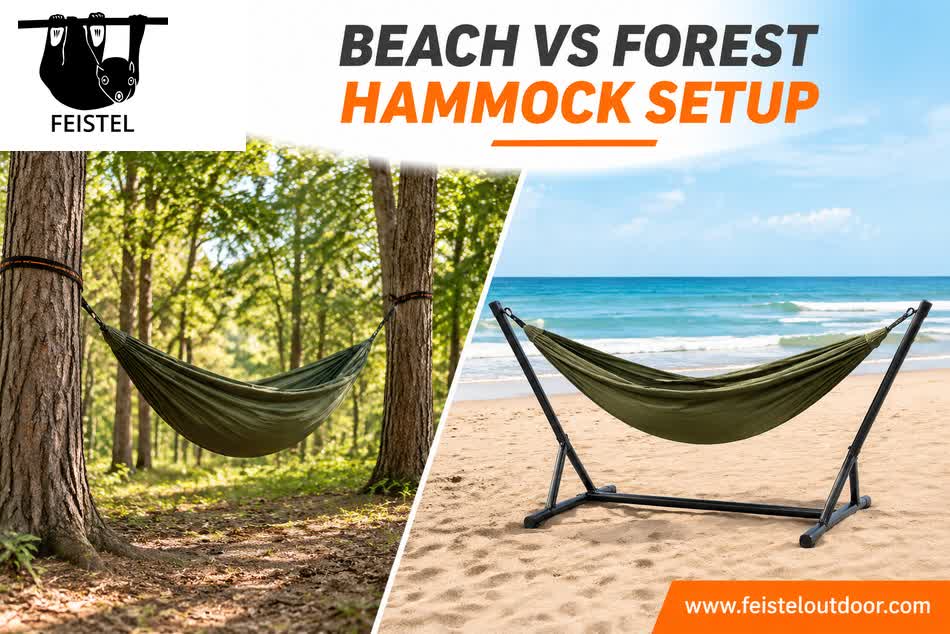
A beach offers open views and cooling air but removes some of the assumptions that work in a wooded campsite. On a forest trail, a camper may find two permitted, healthy trees on firm ground. On an exposed shore, there may be no suitable trees at all. Even when palms or other trees are visible, local regulations, tree health, root exposure and public access can make them inappropriate attachment points. A portable hammock is useful only when its suspension plan fits the actual site. The first decision is therefore not where the photograph will look best; it is whether there is a safe, lawful way to support an occupied hammock.
Coastal ground also changes while the hammock is in use. Dry sand can shift beneath a frame foot, saturated sand can soften as waves approach, and wind can produce lateral movement that is absent from a quiet backyard. Metal parts may encounter salt spray, and grains of sand can enter connecting joints. These conditions make inspection and placement more important than a fast assembly claim. Our guidance at FEISTEL is to identify the anchoring system, assess the site, assemble to the model-specific instructions, and perform a cautious low-height loading check before anyone reclines.
Most beach plans fall into three categories: a complete freestanding hammock-and-stand assembly, a conventional gathered-end hammock attached to two authorized structural supports, or a hammock used in a campground next to the coast rather than directly on loose sand. These are not interchangeable arrangements. A fabric hammock sold with two tree straps is not automatically a freestanding product. A stand marketed for patios is not automatically approved for unrestricted use on soft sand. And having straps does not establish that a particular palm, signpost or fence can carry an occupied hammock safely.
For visitors with no known anchor points, a freestanding system may be the more practical starting option, provided its manufacturer permits the intended ground and wind conditions. If the stand's instructions require solid, level ground, an uneven dune or soft slope is not acceptable merely because the assembly appears upright. Where no suitable support is available, the responsible choice is to use another form of seating. A beach visit is not a reason to improvise a load-bearing system with random objects found on the shoreline.
Before unpacking any equipment, look for posted access rules, high-water debris lines, nearby dune barriers and possible incoming tides. A location that is dry when a visitor arrives can become wet later in the day. The visible waterline is not a reliable indicator of the maximum water reach during the planned visit, particularly when wind-driven waves or storm surge are possible. Consult local tide predictions and weather notices, but also observe the shore itself. Move farther inland when there is uncertainty, and never place a hammock where rising water could isolate the user or obstruct an evacuation route.
Also consider cliffs, unstable banks, falling branches and crowded footpaths. A hammock positioned directly in a public access corridor creates a trip hazard; a raised strap may be difficult for other beach users to notice. Avoid wildlife protection areas and dune vegetation even if the sand inside looks firm. We recommend treating site selection as a repeatable checklist: permission, tide, terrain, wind, overhead hazards, pedestrian clearance and an unobstructed exit. Only after those conditions are satisfied should assembly begin.
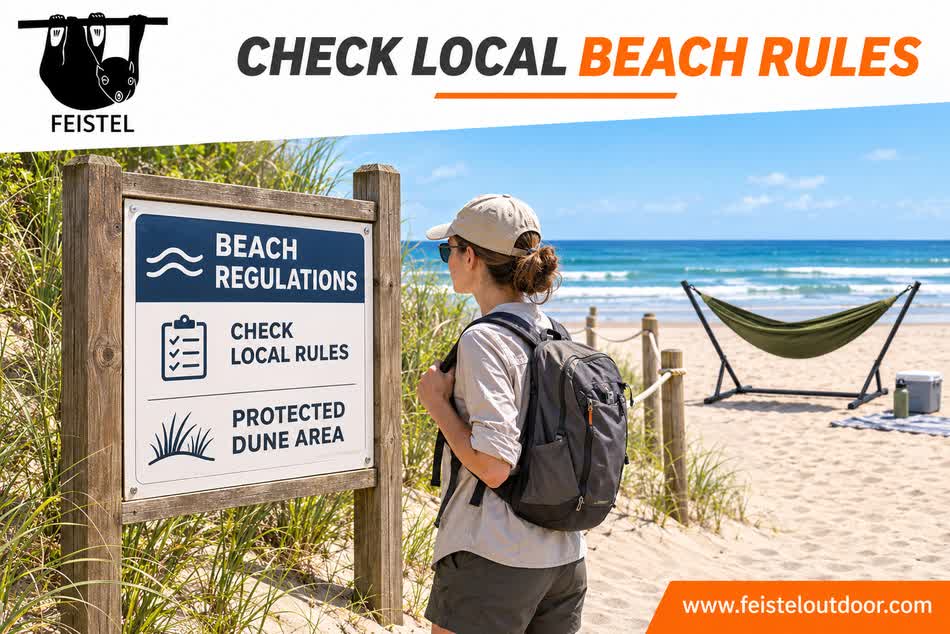
Beaches are governed by different authorities, so there is no universal coastal rule permitting hammocks. A local park may prohibit attachments to trees, overnight equipment, tents, stakes or structures that block public access. Protected dunes may also be closed to foot traffic even when they appear empty. Regulations can change by season to protect nesting birds or turtles. Search the specific beach authority's current guidance rather than relying on a general outdoor blog, and ask staff if rules are unclear.
Permission to enter a beach should not be confused with permission to attach equipment. The weight applied to a tree, railing or shelter post is not the same as the load from casually leaning against it. Likewise, a campground's permission to pitch a ground tent does not automatically authorize an elevated hammock stand. A good product manual cannot override local environmental restrictions. In our view, a beach-hammock guide needs a rule-checking step before gear selection because an ideal product can still be wrong for a particular site.
Two trees that happen to stand the right distance apart can be unsuitable because of thin trunks, damaged roots, unstable soil, dead limbs or protected status. Coastal trees may grow on eroding banks where the visible trunk looks healthy while the support around the roots is compromised. Palm trunks and other species also vary in their ability to tolerate straps. Do not infer suitability from diameter alone, and never attach to young trees, fragile vegetation or structures whose load rating is unknown.
Where tree hanging is allowed and the specific trees are suitable, use the suspension system recommended for the hammock, protect bark with appropriate wide straps and inspect the complete route of the load from fabric to anchor. The strap should not cut into the trunk or rub loose over a rough edge. Avoid nails, screws and improvised knots that are not part of the approved configuration. If there is any doubt about a tree's structural condition, choose a different place or a properly approved stand.
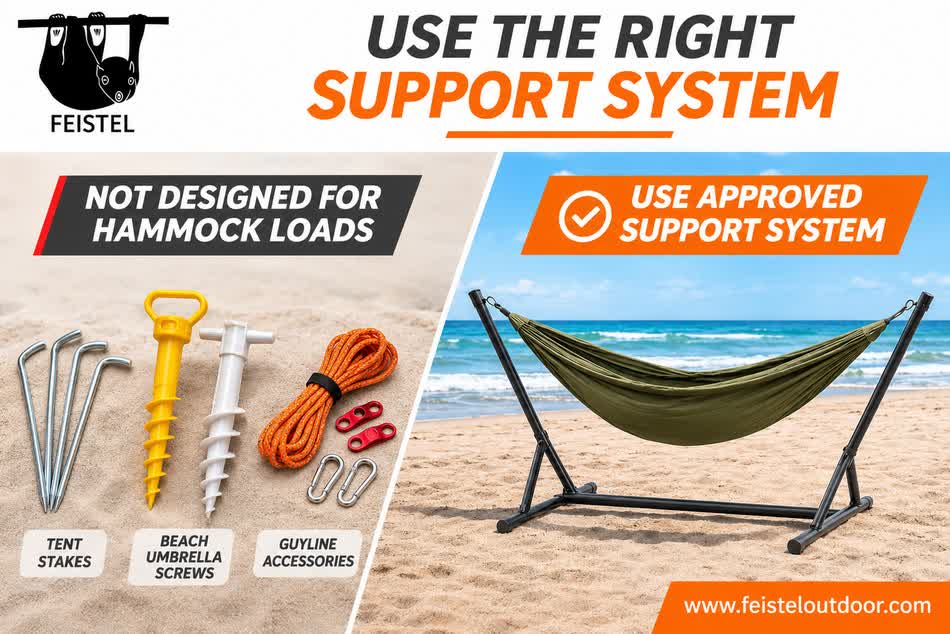
Sand anchors sold for umbrellas or shelter guylines are not necessarily designed for the horizontal and vertical forces generated by an occupied hammock. A tarp corner carries a very different load from a person's full body weight. An anchor that holds a shade fabric in a mild breeze can pull out when a reclining person changes position. Soil strength varies with moisture, grain size, compaction and installation depth, so even a large-looking stake offers no transferable rating without controlled tests in the intended conditions.
An online account of a successful overnight setup using long handmade stakes is interesting field experience, not a universal design specification. Personal body weight, wind, sand and geometry may differ greatly from a reader's next campsite. We do not recommend constructing a person-bearing hammock support from tent stakes, driftwood, beach umbrellas or unverified sand screws. Load-bearing anchor systems require engineering design, appropriate site testing and clear operational limits; without these, a freestanding approved solution or alternative seating is safer.
Open the carry bag on a groundsheet where small parts cannot disappear into loose sand. Compare every piece with the manufacturer's parts list and look for bent members, cracking at welds, damaged coatings, missing pins, distorted holes and worn suspension hooks. Check that each tube end and locking mechanism is clear of sand. Do not replace a missing steel pin with a spare tent peg or substitute an unidentified carabiner because its shape looks similar. A complete set matters more than the speed of assembling an incomplete one.
Read the stand's approved dimensions, load information and assembly order before connecting parts. If the stand and fabric have separate capacities, the complete system is limited by its weakest approved component and configuration. Published numbers may not cover active swinging, sudden entry or wind loading. At FEISTEL, we encourage buyers to keep the actual manual with the equipment so that the person assembling a stand at the beach is not forced to remember where a locking component belongs.
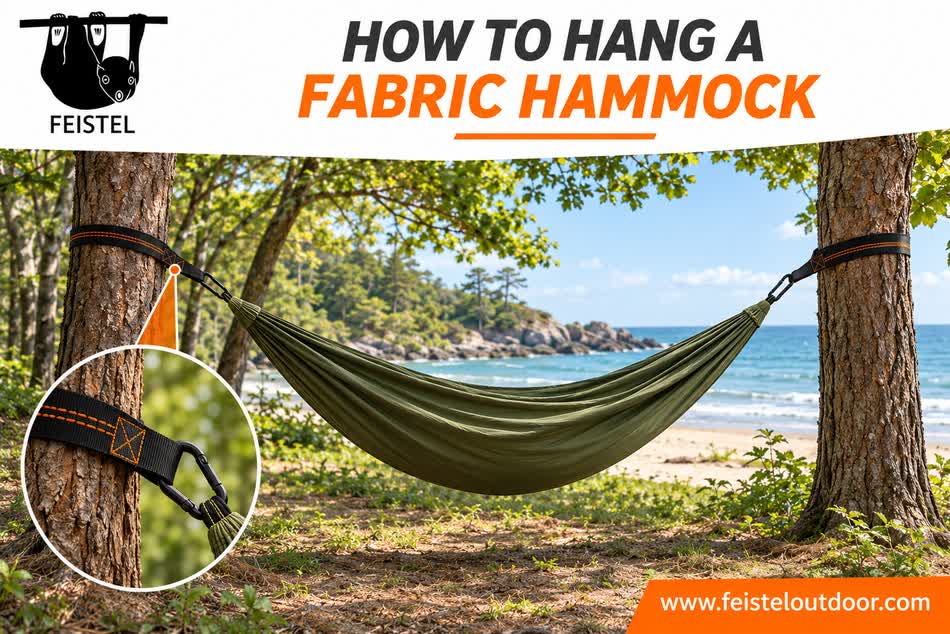
Start by laying the frame members in the intended orientation on a clear, stable surface. Join the base and uprights in the order stated by the stand manual; a familiar-looking frame may use a different bolt, pin or locking sequence from another model. Fully seat all connectors, verify each retaining device is engaged and confirm that hooks face the intended direction. Install only the hammock body approved for that stand, centered between the suspension points, without wrapping surplus fabric around sharp metal edges.
With no occupant inside, verify the base does not rock. Check equal contact at each foot and inspect the joints once more. Carefully apply downward pressure, then enter slowly while keeping feet available for balance. Stop immediately if a foot sinks, a joint shifts or the suspension makes unexpected movements. Recheck level after the first occupied loading because the sand may consolidate under weight. A stand that must be propped on improvised unstable objects is not ready for use. Follow the exact model's manual if its procedure differs from this overview.
Freestanding stands transmit loads into relatively small contact patches beneath their legs. Loose dry sand can compress and allow one foot to settle faster than another, tilting the structure. A rigid ground-contact solution designed and approved for the frame may help distribute pressure, but a thin picnic blanket is not an engineering substitute for a properly sized footing. A large board placed under one leg can also tip or slide if it is not compatible with the frame and terrain. Do not rely on a towel or cardboard as a certified stabilizer.
The safest option is the surface permitted by the manufacturer. If a frame is explicitly rated for sand, follow its specified footprint or leveling accessories and operating limits. If no sand-use guidance exists, ask the supplier for clarification rather than inventing an adaptation. Pay special attention to a downhill slope and sand that appears firm on top but is saturated beneath. Throughout use, look for asymmetrical settlement, shifting feet or changes in the hammock height.
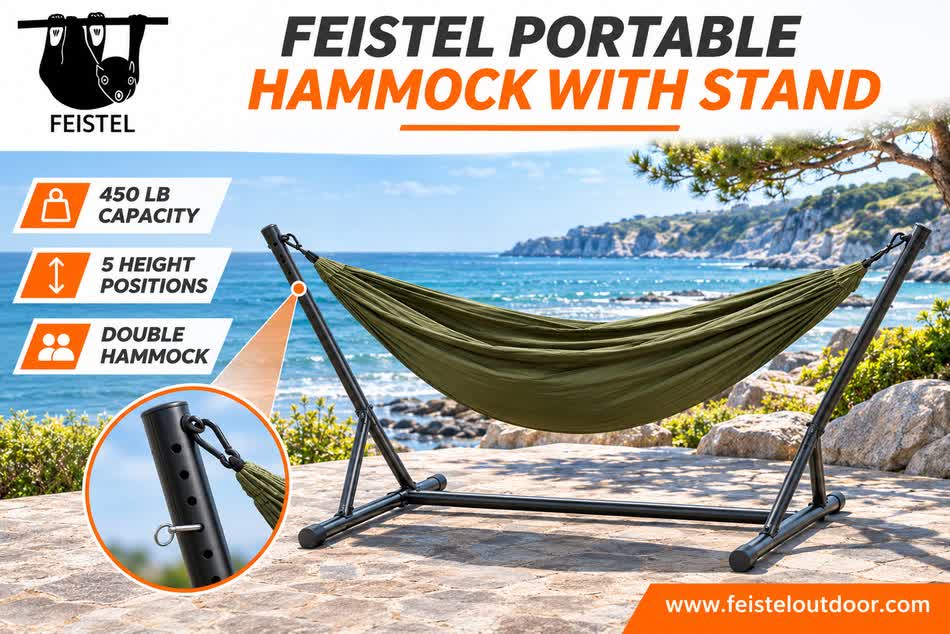
For a tree-compatible FEISTEL-style gathered-end hammock, begin only after confirming that both anchors are suitable and permitted. Inspect the fabric, end gathering, carabiners and each suspension strap. Place approved tree straps at the height and spacing required by the hammock and the anchor situation, avoiding dead branches and sharp friction points. Connect each end through the designed loops and hardware, not through random fabric folds. Keep the bed low enough for a controlled entry and avoid creating a hard, perfectly horizontal suspension.
Before full use, check that the system is symmetrical and that both connectors are correctly closed and oriented. Sit slowly at the center, retaining your feet on the ground; then recline gently. A hammock that bottoms out, pulls a strap downward or twists a connector must be adjusted before continued use. Do not use a generic thirty-degree rule as a substitute for model instructions. The correct hang depends on suspension length, bed geometry and the system's recommended operating range.
Many gathered-end hammocks are initially adjusted with a visibly sagging suspension, and roughly thirty degrees is frequently used as a teaching illustration for some configurations. The important physics is that making a heavily loaded suspension nearly horizontal can increase the horizontal tension in the straps. However, a single numerical angle cannot certify safe use. Different frames, gathered-end bodies and purpose-built structural systems may have different required geometry. In particular, a fixed metal stand must be assembled as designed instead of being manipulated to resemble a tree-hanging diagram.
For beach users, visual judgments can be misleading because sloped ground alters apparent height. Use the actual suspension instructions and check clearance after the person is seated, not only when the hammock is empty. Load ratings for fabric, connectors, stands and anchors should be treated as separate pieces of evidence. When those ratings are unclear or conflicting, seek clarification from the supplier before using the system. Comfort adjustment comes after structural suitability, never before it.
A beach hammock is often used by people who are barefoot, carrying sunscreen or stepping from uneven sand. Keep the occupied bed at a height that permits stable entry and exit according to the product instructions. The right height depends on the user's mobility and the ground underneath; the goal is not a universal number of centimeters. If the hammock touches the ground under full load, it is too low. If a user must climb or jump into it, the configuration may create an unnecessary fall hazard.
Practice sitting in the middle while holding both sides of the bed, with the feet available for support. Recline gradually instead of dropping into the fabric. When standing, move back to a stable seated position and place both feet securely before shifting weight off the hammock. Keep children supervised and do not treat a hammock as playground equipment. A calm entry routine also reveals loose connections and uneven frame support earlier than a sudden full-body transfer.
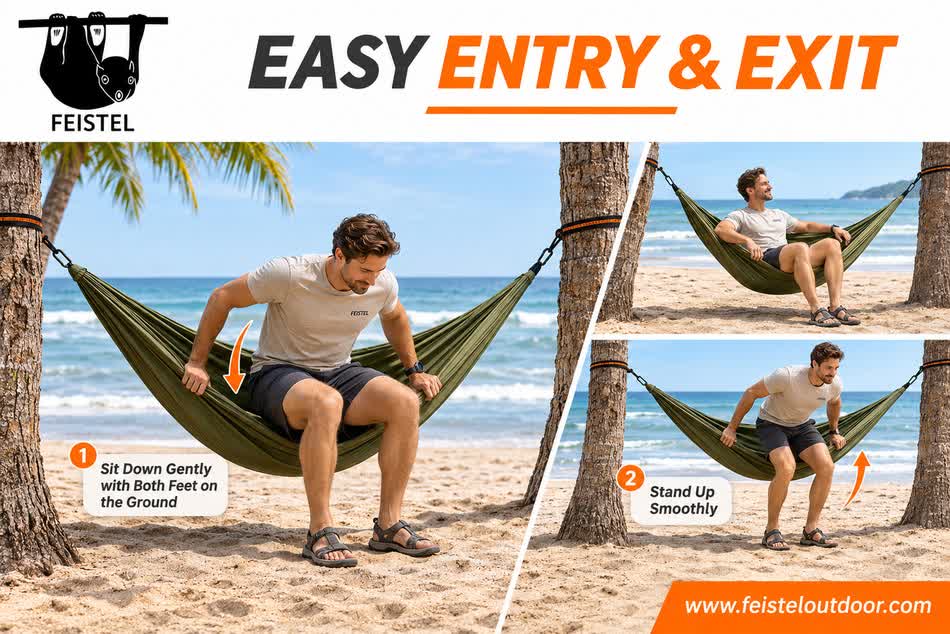
Coastal wind is not just a comfort variable. Gusts can push a suspended bed sideways, move a lightweight stand, pull loose items into the suspension and disturb improvised shade covers. Check local forecasts and watch for changing conditions throughout the visit. Do not assume that a frame's body-weight rating includes resistance to sideways wind loads. An unoccupied hammock can still act as a sail if it carries a large fabric surface or an added canopy.
If the hammock begins swinging unpredictably, the base shifts or the weather worsens, exit carefully and take the system down. Do not attach random ground stakes to the frame in the hope of creating a wind rating the manufacturer has not provided. A large towel draped over a frame may increase drag or obstruct the user's vision of the joints. Purpose-built sun or wind accessories should be used only when specified compatible. Our practical recommendation is simple: no coastal view is worth staying suspended in unsafe gusts.
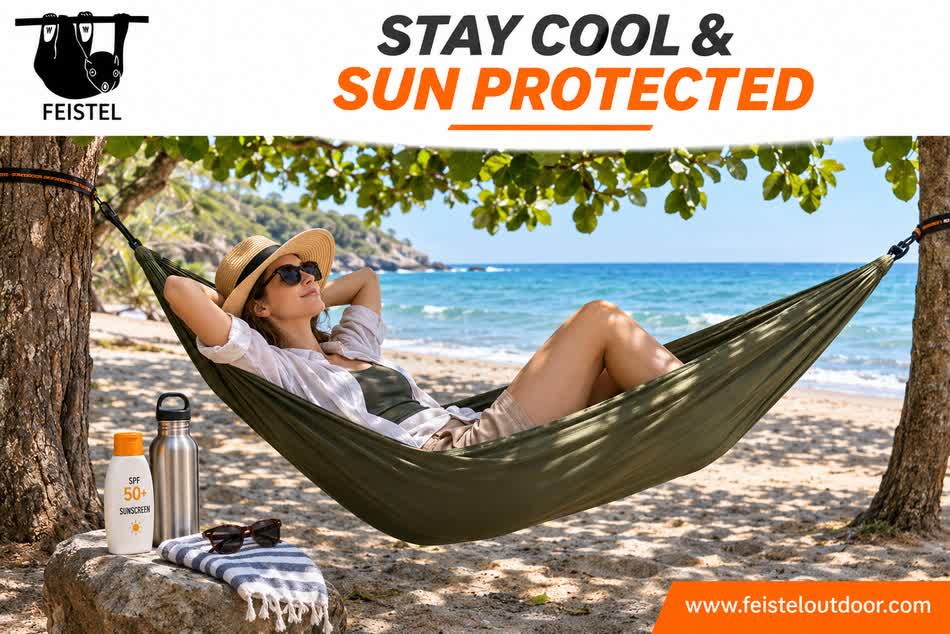
A hammock provides an elevated place to rest but does not, by itself, protect the skin from ultraviolet radiation. Being cooled by a sea breeze can make direct sunlight feel less intense than it is. Choose permitted natural shade when available without attaching to prohibited vegetation. Use appropriate personal sun protection and plan breaks from midday exposure. A fabric hammock may cover portions of the body, but the product's material description does not establish a tested ultraviolet protection factor for the entire user.
Some portable stands offer a canopy accessory, but one should never be assumed included. When a canopy is used, check compatibility, wind limitations and how its loads are transferred into the frame. Avoid improvising overhead covers that could snag, collapse or catch wind. Shade position also changes during the day; a site that begins in shadow may become fully exposed within an hour or two. Reassess shade without compromising distance from dunes, cliffs or pedestrian paths.
Beach air carries moisture and sometimes salt, while fine sand can abrade fabrics, jam folding joints and interfere with closures. Neither a steel frame described as weather-resistant nor a nylon bed should be assumed immune to corrosion or abrasion. Inspect plated hooks, weld locations, fasteners and coating edges, where protective layers are easily damaged. Check whether connectors can close fully after exposure to grit. Never force a gritty spring gate shut or ignore a pin that no longer seats properly.
After the visit, shake out the bed away from other people and rinse components only as directed by their care instructions. Dry fabrics, seams, straps and metal completely before long-term storage. A freshwater rinse may help with salt, but incompatible cleaning chemicals or prolonged wet storage can create new damage. If a structural metal part shows significant rust, cracks or deformation, remove the assembly from service until its manufacturer assesses it. Coastal care is a system-level responsibility, not merely a cosmetic preference.
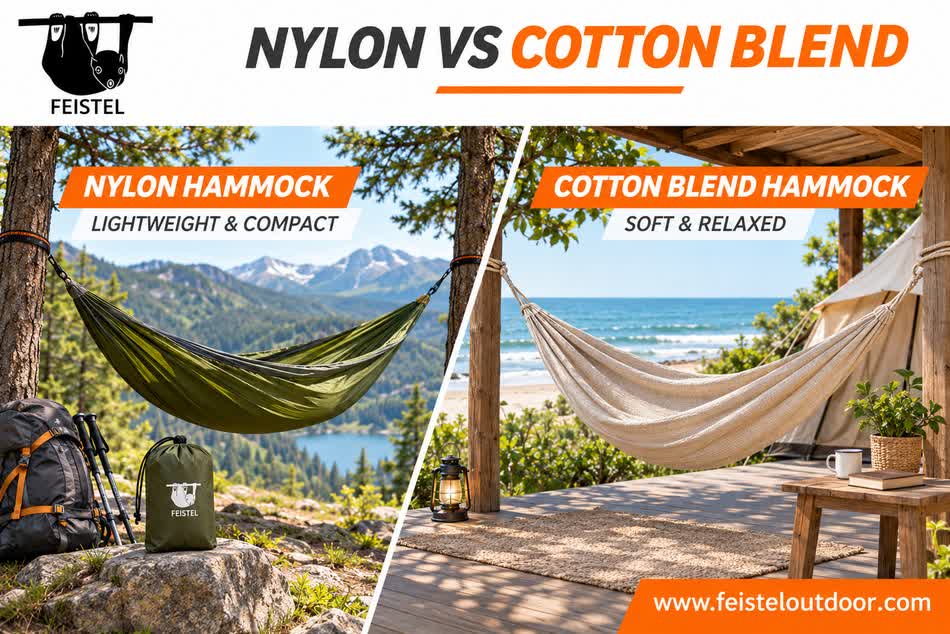
Light woven nylon is appealing when visitors walk a long distance from parking to the shore. It folds into a compact bag and can be shaken clear of loose surface sand. Cotton-rich canvas often feels different against the skin and may suit relaxed use when carried by vehicle, but it can retain moisture and generally calls for careful drying. Neither fabric can be declared categorically better without considering weave, finish, construction and user preference. Likewise, material names do not reveal a finished hammock's safe carrying capacity.
At FEISTEL, we suggest choosing by trip profile. For a short walk to approved anchors, a compact nylon hammock may be practical. For a permitted location suitable for a stand and ample vehicle space, a more substantial hammock body may be attractive. Some stand product pages combine cotton and polyester. Beach suitability still depends on the approved stand and site, not on the fabric choice alone. Consumers should inspect the finished seams, end attachments and hardware rather than selecting solely from a marketing material label.
The FEISTEL portable hammock with stand product identified as a 450 lb double configuration provides a steel frame, five height positions and a hammock body described on its current page as cotton with colored polyester. The published capacity is approximately 204 kg and the item is presented for camping, patios and backyard leisure. Those are supplier-listed product details, not independently reproduced laboratory results in this guide. The page's ability to move between campsites and patios should not be read as unconditional approval for every grade of loose beach sand.
For a beach trip, confirm the exact packing dimensions, assembled footprint, component count, coating care instructions and whether the frame is explicitly approved for the surface you intend to use. The kit may be best suited to vehicle-accessible recreation because a rigid frame adds more luggage than a fabric-only hammock. If the support surface cannot meet the requirements, take the hammock elsewhere. Product page: FEISTEL 450 lb portable hammock with stand.
Another FEISTEL listing describes a double hammock with a steel stand and a published 400 lb capacity, approximately 181 kg. Its stated hammock size is about 125 by 60 inches, with an 80 by 60 inch bed area, while the stand is listed at about 108 by 40 by 42 inches. These dimensions matter because a stand that looks small on an e-commerce image may occupy substantial space on a crowded beach. Always measure the intended placement area and leave additional clearance for entry, movement and passersby.
The 400 lb and 450 lb listings should not be merged into an imaginary universal FEISTEL specification. They may represent different configurations or published variants, and buyers should request the current bill of materials and corresponding approved capacity. An impressive rating does not override local site rules or poor support conditions. For sourcing discussions, use the exact product URL and configuration: FEISTEL 400 lb double hammock with stand.
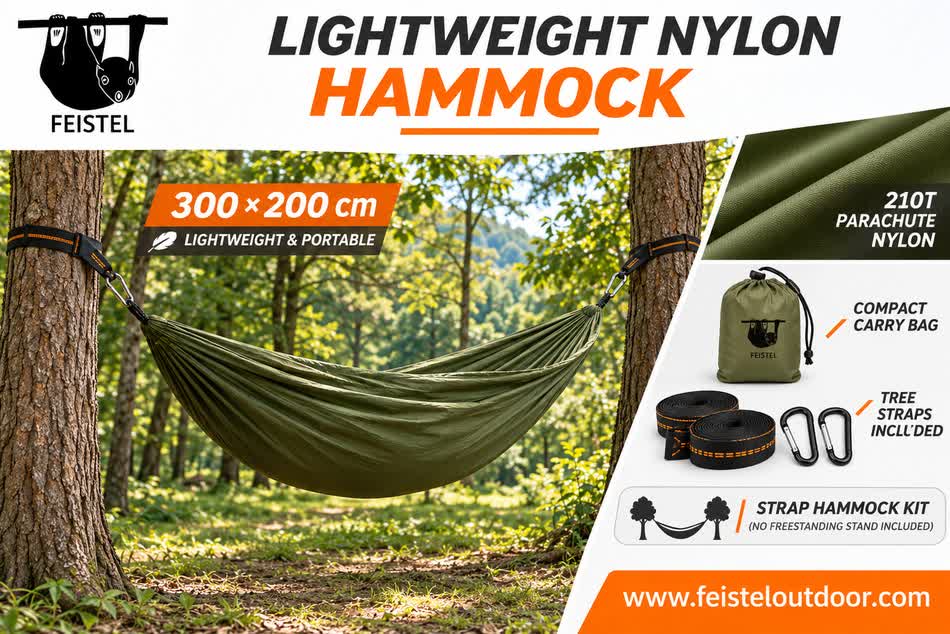
FEISTEL also lists a 300 × 200 cm gathered-end hammock made from 210T parachute nylon, with two adjustable straps, carabiners and a carry bag. The relevant product listing gives a 0.45 kg unit weight, a 15 × 9 cm packed size and a 140 kg rated load in its specification section. This is a compact fabric suspension kit, not a hammock stand. The two straps are intended for compatible authorized anchors; they cannot turn empty beach sand into a safe mounting system. Do not confuse a manufacturer's beach-use photograph with a tested sand-anchor solution.
An important purchasing distinction is that the published unit weight may describe the hammock rather than a complete trip load, particularly when accessories or an optional frame are involved. For a beach walk, calculate what will actually be carried, including straps, water and sun protection. Also note that wide fabric does not prove two-person overnight suitability. This model is most relevant when compliant structural anchors already exist. Product page: FEISTEL 300 × 200 cm nylon hammock.
The most important question is not whether a hammock is portable in isolation. Ask what infrastructure the destination supplies. If appropriate approved trees or structural anchors already exist, a strap-and-fabric kit can be compact and simple. If there are no anchors, a complete freestanding system may solve the support problem, subject to its site approval and stability requirements. If the beach prohibits freestanding furniture or has unsuitable ground, neither option may be valid. A separate foam mat or ground chair could be the practical answer.
After the support question, consider walking distance, vehicle capacity, number of users, desired rest time, setup complexity and exposure to wind or salt. Estimate packed carrying weight for every required component rather than comparing a fabric-only weight with a full-frame package. Check whether the stand and fabric are supplied together and whether replacement pieces are available. The responsible shortlist is usually smaller than the one produced by comparing advertised comfort alone.
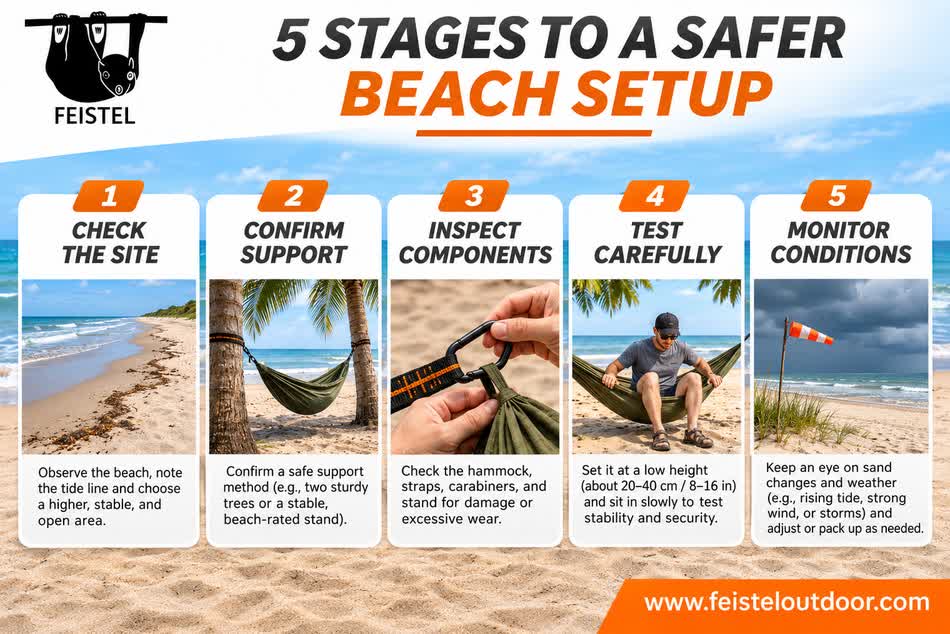
We find it useful to divide the task into five verifiable stages. First, confirm site permission and hazards, including tides, wildlife restrictions and escape routes. Second, identify the actual load-bearing method: approved stand or authorized anchors. Third, inspect components and assemble strictly in accordance with the equipment's instructions. Fourth, conduct a low, cautious entry and alignment check without jumping, bouncing or aggressive swinging. Fifth, monitor for settling, unexpected movement and weather changes until the hammock is packed away.
This sequence intentionally differs from a sales-page claim that five easy steps will fit every frame. The correct mechanical assembly sequence remains product-specific. A fixed hammock stand may have locking pins and specified frame orientation; a suspended gathered-end hammock relies on straps and connectors. No step list can establish the strength of unidentified stakes, weak roots or improvised posts. Treat the checklist as an operational decision tool that helps users discover when they should stop, not as a substitute for a model's technical manual.
Comfort begins with an appropriate site and the ability to sit and get out without assistance. Use a clean towel within the bed if desired, but do not allow it to cover hardware or create a slippery entry. Reposition slowly to find a comfortable diagonal or centered posture supported by the specific hammock shape. A narrow hanging bed may feel different from a wide one, and users vary in their preference for a deep cocoon versus a flatter lounging surface. Avoid adding heavy items to one side because they can change balance.
Take care with head and neck support, especially during prolonged reading or rest. A small personal cushion may help but should not replace a structural adjustment needed to eliminate excessive tension or ground contact. Keep drinking water close enough to reach without leaning dangerously out of the bed. Use a separate stable place for coolers and heavy bags. If the setup creaks, shifts or makes the user feel unsteady, comfort becomes irrelevant until the structural issue is resolved.
A hammock is not a trampoline or an unsupervised swing. Children can have difficulty judging the edge of a flexible fabric bed, and feet may slip on uneven sand during entry or exit. Use the product only within its stated age and usage limitations, supervise children continuously and maintain clear space around the assembly. Do not position a hammock above hard rocks, sharp shells or a place that could become submerged. For a stand, confirm the rules about multiple occupants and dynamic motion.
A double-size label refers to a design concept, not a blank authorization for any combination of people and movement. The combined occupied load, the way people enter and any swinging all matter. Do not assume that a 400 lb or 450 lb published rating covers simultaneous jumping, bouncing or unusual sideways pulls. If several people want to try the hammock, plan orderly entry and exit rather than crowding onto the fabric at once. Anyone who feels unsteady should stop using the configuration.
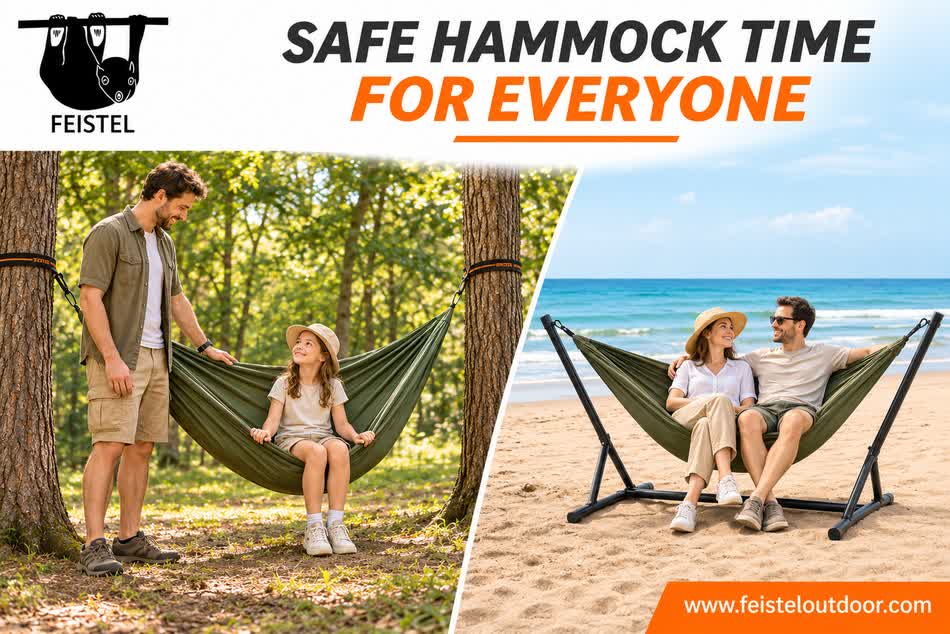
A hammock can be a convenient rest area between beach activities, yet wet sand, sunscreen and saltwater introduce practical maintenance problems. Do not enter with sharp objects in pockets or exposed zippers that could snag the woven body. Shake sand off towels and clothing before use, and avoid placing wet gear directly over steel joints or connection points. Check that a damp fabric surface is not slippery before sitting. If a swimsuit is dripping, a separate dry towel can help reduce unnecessary moisture retained in the hammock bed.
Keep food and drink containers off the suspension system. A cooler hung from a strap adds an unintended load and may create a twisting force, even if its weight seems insignificant. For swimmers, plan where to place keys, phones and shoes without creating a trip hazard around frame feet. After use, remove loose debris and follow the fabric's cleaning instructions rather than applying bleach or aggressive detergents. An easy-to-maintain beach routine can extend the usefulness of equipment without promising a particular service life.
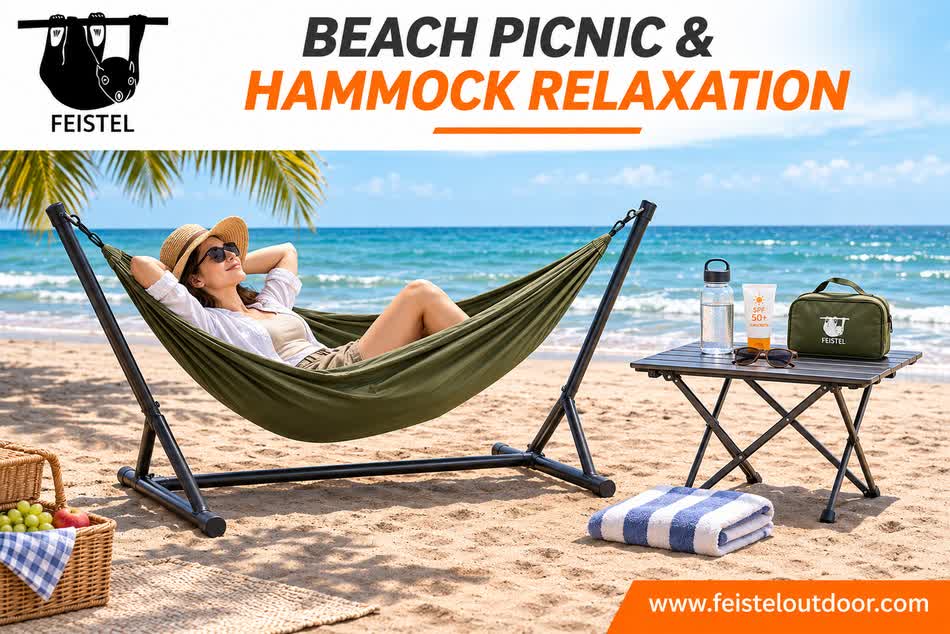
Daytime lounging and overnight coastal camping are distinct activities. Overnight campers must consider whether sleeping is allowed, the full tidal cycle, changing wind, rain, insects and lower nighttime temperatures. A basic beach hammock is not a weatherproof tent. Mesh protects only according to its enclosure design and closure condition; a separate rain shelter is necessary when precipitation is possible. Even warm coastal evenings can feel cool when moving air reaches the underside of the suspended sleeper. The hammock fabric itself is not a reliable thermal insulation layer.
If the site has no approved anchors and a stand has no documented overnight or sand-use capability, there is no reason to attempt a makeshift workaround. Choose a lawful campsite and equipment designed for the expected conditions instead. Keep an exit and shelter plan for incoming storms, and check local overnight restrictions. A beach sunset may look like a perfect setting for a hammock photograph, but photography and a safe full-night sleeping system are not equivalent requirements.
Weather plans should begin before the trip and remain active during it. Consult marine forecasts as appropriate, including wind advisories and thunderstorms. Lightning risk is particularly concerning on exposed shorelines; a fabric hammock, stand or canopy is not a protective shelter. Leave the beach and seek appropriate substantial shelter when thunderstorms threaten. Do not remain attached to exposed metal structures while waiting for the storm to pass. Heavy rain can also change sand firmness and reduce traction near stand feet.
An incoming tide may approach more quickly when combined with waves and strong wind. If the location becomes less stable or an evacuation route is compromised, take down the setup while conditions remain manageable. Securing a stand with extra rope does not transform it into a storm-rated shelter. Our emphasis is on conservative exit decisions: because a hammock is recreational equipment, users should have no reason to continue occupying it when environmental hazards increase.
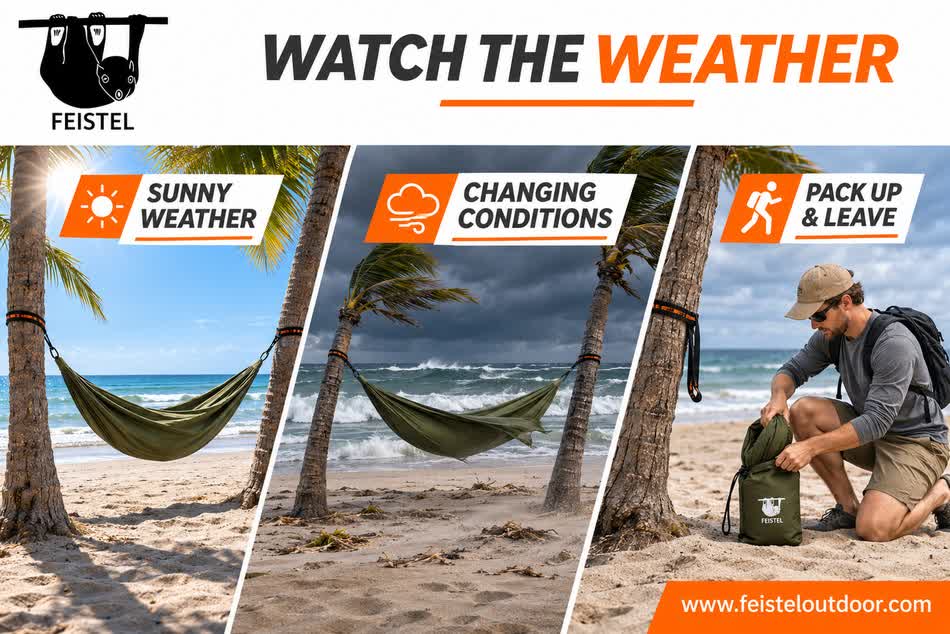
Packing is part of the setup procedure because forgotten maintenance affects the next trip. Begin by checking that the hammock has no occupant and that all surrounding items are clear. Remove the fabric gently, place hardware on a clean cloth and separate the pieces that should remain dry. Shake sand from seams, strap loops and the carry bag. Where care instructions permit it, clean salt residue with freshwater and allow complete drying before long-term storage. Keep track of small pins or clips rather than burying them in a sandy storage bag.
For a frame, examine metal surfaces for scratches, early rust and grit in joints. A damaged protective coating may require manufacturer-approved maintenance. Do not lubricate or modify locking systems without guidance, because incompatible products can attract grit or alter friction. Inspect the fabric for small cuts and the straps for edge wear. If any component is questionable, set it aside until its repair or replacement method is confirmed. This routine is particularly important for buyers using a demonstration unit repeatedly along the coast.
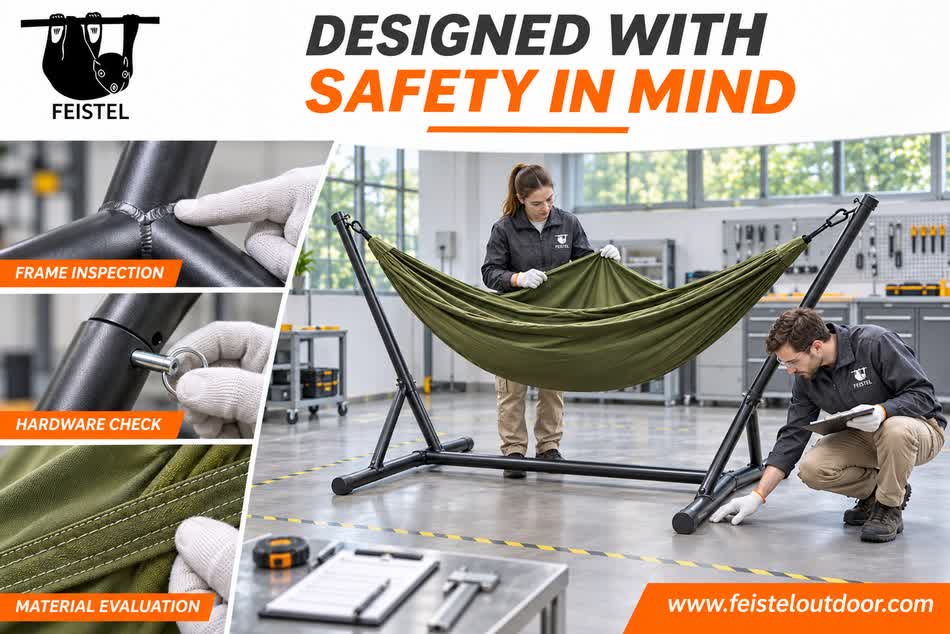
As an outdoor equipment manufacturer, we believe a meaningful beach-suitability claim needs more than a photograph taken beside the sea. A structured evaluation should identify the intended ground surface, assembled footprint, maximum occupancy, load direction, repeated loading and exposure to salt and sand. For a freestanding hammock, it would examine whether each foot remains stable under representative conditions. For a fabric-only hammock, it would examine the approved anchors and suspension hardware rather than pretending the cloth can support itself.
We also recommend recording the exact configuration during any testing: fabric construction, connector type, stand version, coatings, pins and the simulated environmental conditions. The purpose is to prevent a test on one model from being applied to another merely because both are called portable hammocks. This section describes the evidence we would seek, not a claim that FEISTEL has performed or passed a specific unpublished beach test. Buyers can request the available test documents for the precise SKU they are considering.
Importers developing a private-label beach hammock should begin by specifying whether the customer will use a vehicle, public beach or regulated campsite. That single decision influences the required carry volume, stand size, packaging and instruction language. Other useful requirements include clear component drawings, coating specifications, inspection criteria, approved usage surfaces, warnings for uneven ground and replacement-part traceability. Color and logo choices matter to retail presentation, but they do not answer the fundamental stability question.
We advise defining the entire kit before approving a sample. A fabric-only package and a stand-plus-hammock package should have different product titles, photographs, contents diagrams and capacity descriptions. If marketing mentions beach sand, there should be technical support for that claim and explicit limitations. A buyer can also request corrosion-related documentation, packaging checks and clear assembly images. These steps reduce the risk that consumers interpret a broad lifestyle statement as a guarantee of unlimited coastal conditions.
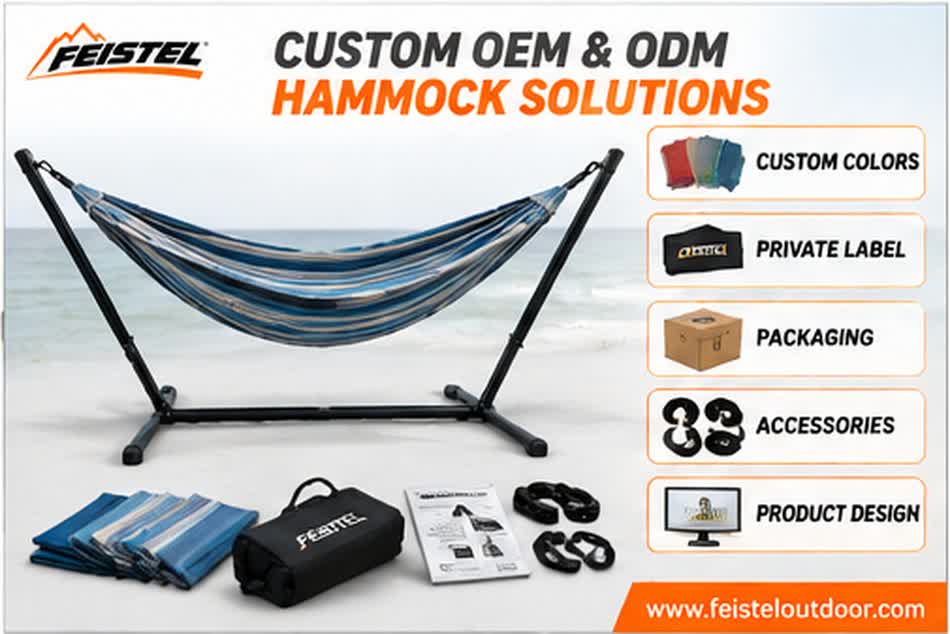
Before a wholesale order leaves the factory, technical documents should agree with the actual shipped configuration. The product page, retail box, assembly manual, spare-parts list and any capacity statement ought to refer to the same SKU and revision. If a stand has been modified, earlier instructions may no longer fit. Dimensions need to identify whether they are open frame size, usable fabric bed area or carton dimensions. Listed product weight should distinguish the hammock body from a complete stand kit.
For coastal positioning, importers should ask which statements are supported by testing and which are general intended-use descriptions. A laboratory report on a textile does not necessarily establish the strength of its carabiners or stand, while a coating test does not prove all-season resistance to ocean exposure. We would rather provide precise limitations than a one-line claim that a product works anywhere. That approach makes the product easier to evaluate and the instructions more useful for the end user.
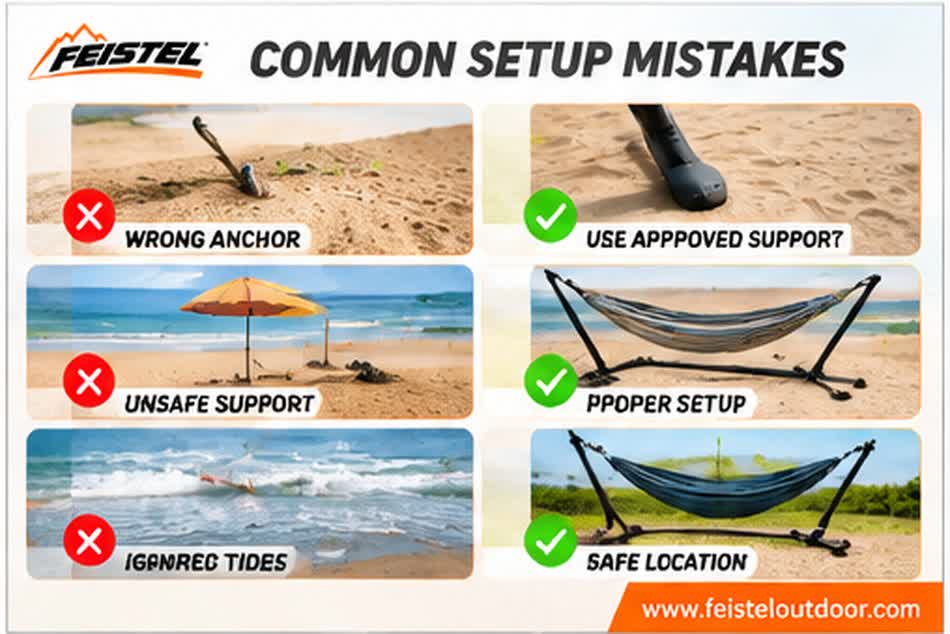
One mistake is treating a ground stake as if it were a structural post. Correct it by requiring manufacturer-approved person-bearing supports. A second is placing a frame on visually flat but loose sand; correct it by verifying the approved surface and watching for uneven settlement. A third is using a beach umbrella or railing as an anchor without knowing its strength. Those objects may be built to resist a very different load. A fourth is ignoring the tide because the setup starts on dry sand. Use local forecasts and shoreline evidence instead.
Other errors include combining unmatched stand and bed components, leaving one retaining pin partly engaged, bringing a stand without enough space to assemble it, and assuming every double hammock can hold two people in dynamic motion. Users also forget that beach wind may be stronger than wind felt behind buildings. The correction in each case is to establish the exact equipment configuration, read the relevant manual and stop when a key assumption cannot be verified. Improvisation should never replace a missing engineering requirement.
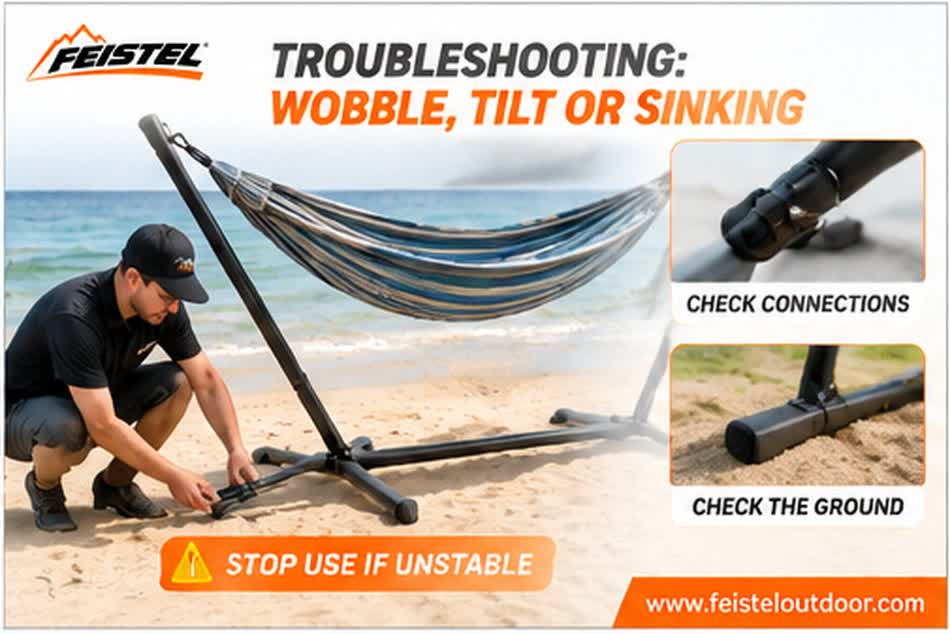
If a freestanding hammock shifts when gently tested, do not continue loading it. First have everyone exit and remove the load. Inspect whether all feet contact the approved surface, whether the frame is oriented correctly and whether all joints and pins are secured. Look for a leg that has started sinking into sand or a base position that changed as the bed was occupied. Resetting the stand repeatedly without understanding the cause can conceal a dangerous condition rather than fix it.
A change in the surface may require relocating the entire assembly to firmer permitted ground. Do not stack rocks, driftwood or improvised boards beneath one foot as a quick repair. These objects can roll or shift under asymmetric loading. If the stand's manufacturer provides an approved stabilization accessory, use it only as instructed. If a stable installation remains impossible, do not use the hammock at that site. A failed stability check is a valuable warning, not an obstacle to overcome at any cost.
When the occupied bed contacts the ground, determine whether the cause is a loose suspension, unexpected stretch, an incorrectly selected frame hook or a sinking support. Never solve a sinking base by raising the fabric higher and pretending the foundation has become stable. For an anchor-hung hammock, check the model's recommended suspension geometry and attachment loops. For a stand, use only the height positions and attachment points authorized by the stand design. Do not over-tighten fabric beyond the manufacturer's guidance.
A hammock can also feel uncomfortable because the person is lying along the centerline of a gathered bed, sitting too close to one end or pulling the fabric into a narrow band. Try a gentle diagonal recline when appropriate for that model. If the bed creaks or tension changes unexpectedly, exit before adjusting. Some discomfort is a fit issue; other symptoms signal an installation fault. Distinguishing the two is more useful than assuming all hammocks should feel identical after one setup.
Sand can prevent a connector gate from fully closing and can interfere with folding joints. Inspect a gritty connector outside the loaded system, follow the manufacturer's cleaning method and verify its operation before reuse. Do not rely on a gate that appears closed from a distance while sand prevents the locking mechanism from engaging. If parts have visible corrosion, deep pitting, deformation or cracks, remove them from service until the supplier confirms whether replacement is required.
This is especially important after a holiday trip when the hammock may remain stored for months. Salt residue and trapped moisture can affect equipment between outings. Keep metal components dry and avoid tossing them against sharp rocks or other hard objects. For bulk buyers, consider whether spare connectors and clear inspection graphics should be included with the product. The goal is not to suggest that coastal exposure always causes failure, but to make preventable deterioration easier to identify early.
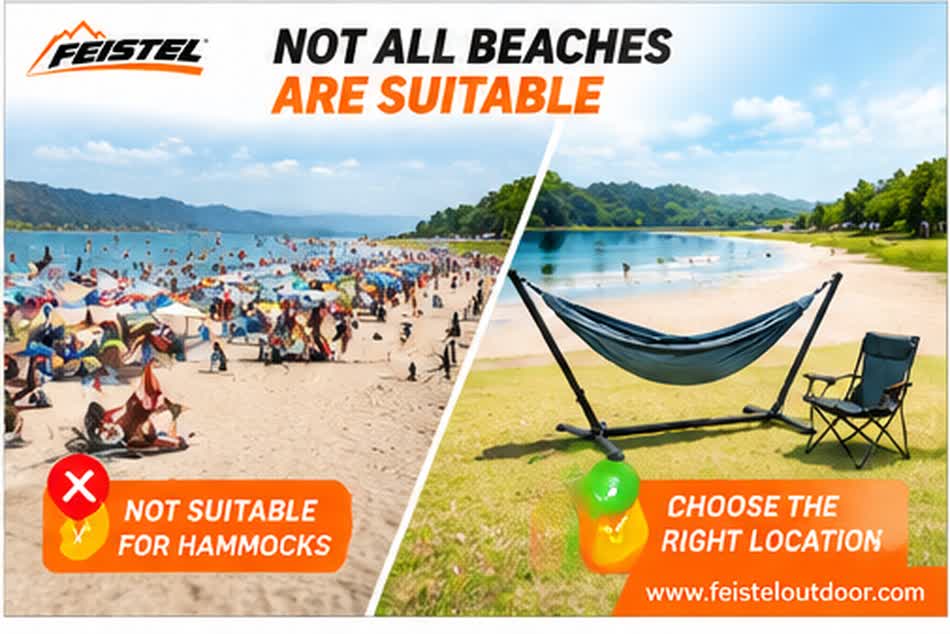
A public beach may be crowded, exposed, environmentally protected or composed of unstable ground. There may be no permitted anchors, no approved surface for a stand and no practical way to carry heavy frame parts from parking. A hammock that works beautifully on a campsite platform can be awkward or unsafe in those conditions. Saying so improves buying advice: consumers need to know not just when a product is pleasant, but when its support requirements are impossible to meet.
Consider a different location when tides leave insufficient room, wind is severe, dunes are closed, or beach regulations exclude the equipment. Ordinary beach seating may better match short visits that involve frequent movement. This article focuses on safe hammock use rather than suggesting a hammock is always superior. At FEISTEL, we believe the right outdoor product is the one that fits the actual site and the user's transport capabilities, even when that means leaving a hammock at home.
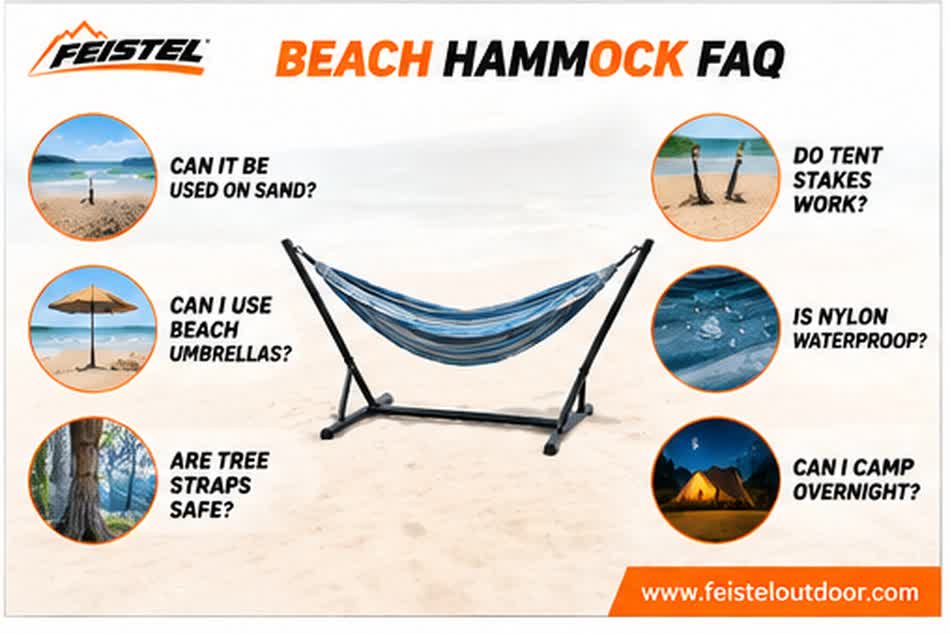
Can a portable hammock be used on sand? Only when the complete support system is approved for that surface and installed as instructed; a fabric-only hammock requires independent approved anchors. Can a beach umbrella serve as an anchor? No assumption should be made that it can safely carry a person. Can a hammock be suspended from two palms? Only if local rules permit it and the anchors have been evaluated as suitable. Do regular tent stakes secure a hammock? They are not interchangeable with documented person-bearing anchors. Does a thirty-degree angle guarantee safety? No, because structure and hardware also matter.
What if a stand sinks? Have the user exit and discontinue use until the support issue is resolved on an approved surface. Is nylon automatically waterproof? No; material naming alone does not prove waterproof construction. Can the setup stay overnight? That depends on site permission and a complete weather-appropriate system. Is a 450 lb label proof of safe use on soft sand? No; the stated rating does not independently establish site stability. Should a hammock be stored wet after sea exposure? Follow its care instructions and dry components before prolonged storage.
The most reliable way to enjoy a hammock at the coast is to reduce the unknowns before anyone lies down. Know the local rules, find a location above foreseeable water reach and identify a legitimate support system. Inspect the exact components, assemble them according to the approved configuration and test cautiously at a low height. Continue watching the ground, connections and weather until the gear is packed away. If one of those conditions cannot be satisfied, change the location or use another seating option.
For buyers comparing equipment, we recommend starting with the distinction between a compact fabric hammock and a complete stand system. FEISTEL offers both categories, but the word portable does not erase their different requirements. Confirm current specifications with the product page and supplier, especially where descriptions differ between variants. A clear understanding of what is actually inside the bag—and what the beach itself can safely support—is more valuable than a promise of effortless setup anywhere.
카테고리
브랜드 : 안휘 FEISTEL 공장 관련제조 : OEM & ODM 상품명 : 야외활동에 적합한 가볍고 작은 접이식 피크닉 테이블입니다. 내구성이 뛰어난 소재로 제작되어 휴대가 간편하고 설치가 쉽습니다.
상표 : 안후이 파이스텔 공장 제조업과 관련 : OEM 및 ODM 제품 : 맞춤형 경량 금속 철 접이식 문 의자는 야외 캠핑에 이상적인 내구성 있는 지지력과 편안함을 제공하며, 휴대하기 편리한 소형 디자인으로 운반 및 보관이 간편합니다.
브랜드 : 안휘 FEISTEL 공장 관련제조 : OEM & ODM 제품 : 야외 휴대용 접이식 롤업 피크닉 테이블: 가볍고 내구성이 뛰어난 알루미늄 디자인으로 높이 조절이 가능하고 설치가 간편하며 캠핑, 피크닉, 야외 활동을 위한 컴팩트한 운반용 가방이 있습니다.
브랜드 : 안휘 FEISTEL 공장 관련제조 : OEM & ODM 상품명 : 다리 높이 조절이 가능한 다용도 휴대용 IGT BBQ 캠핑 테이블입니다. 야외 요리, 캠핑, 피크닉에 이상적입니다. 가볍고 접을 수 있어 휴대가 간편합니다.
브랜드 : 안휘 FEISTEL 공장 관련제조 : OEM & ODM 상품명 : 캠핑, 해변, 야외활동에 적합한 컴팩트하고 가벼운 알루미늄 접이식 테이블입니다. 휴대하기 쉽고 튼튼하며 음식과 음료를 담는 데 이상적입니다.
상표 : 안후이 파이스텔 공장 제조업과 관련 : OEM 및 ODM 제품 : 이 캠핑용 접이식 나무 라운지 의자는 튼튼한 프레임, 인체공학적 리클라이닝 디자인, 컴팩트한 접이식 구조를 갖추고 있어 해변, 캠핑장 또는 뒷마당에서 휴식을 취하기에 완벽합니다.
상표 : 안후이 파이스텔 공장 제조업과 관련 : OEM 및 ODM 제품 : 이 야외용 접이식 알루미늄 프레임 캠핑 의자는 조절 가능한 등받이와 가볍지만 견고한 디자인을 자랑하며, 캠핑, 해변 여행, 피크닉, 야외 휴식에 휴대하기 편리하고 편안함을 제공합니다.
상표 : 안후이 파이스텔 공장 관련 제조 : OEM 및 ODM 제품 : 등산 및 배낭여행용 미니 의자는 내구성이 뛰어난 옥스퍼드 원단으로 접이식 디자인을 갖추고 있으며, 독창적인 필통 주머니가 있어 캠핑과 야외 활동에 휴대성, 편안함, 실용성을 제공합니다.
상표 : 안후이 파이스텔 공장 제조업과 관련 : OEM 및 ODM 제품 : 도매 하이킹 장비 여행용 침대는 높이 조절이 가능한 접이식 캠핑용 침대로, 튼튼한 지지력, 간편한 휴대성, 야외 모험을 위한 편안한 휴식을 제공합니다.
브랜드 : 안휘 FEISTEL 공장 관련제조 : OEM & ODM 상품명 : 내구성이 뛰어난 프레임, 손쉬운 설치, 여행에 편리한 운반 가방을 갖춘 배낭 여행에 적합한 야외용 초경량 싱글 콤팩트 휴대용 접이식 캠핑 침대입니다.
연결 상태를 유지하자 :