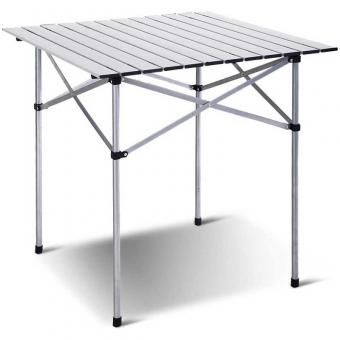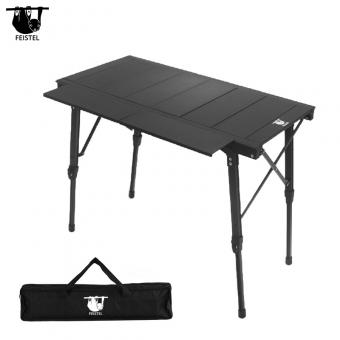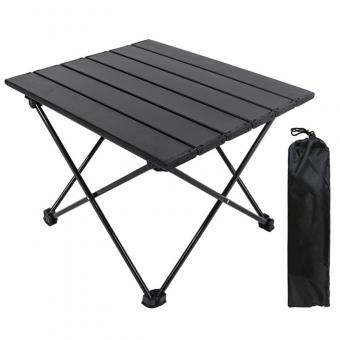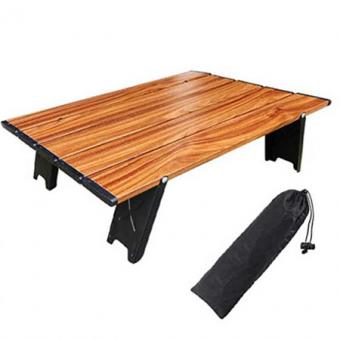
브랜드 : 안휘 FEISTEL 공장 관련제조 : OEM & ODM 상품명 : 야외활동에 적합한 가볍고 작은 접이식 피크닉 테이블입니다. 내구성이 뛰어난 소재로 제작되어 휴대가 간편하고 설치가 쉽습니다.
닐 우리 웹사이트에 오신 것을 환영합니다!
더 알아보기
At FEISTEL, we approach the camping chair vs beach chair question as a question of intended use, ground conditions and construction—not simply a matter of product names. A practical chair for a campsite may also be a comfortable chair for the beach, but only when its footprint, materials, frame geometry and carrying method match the environment. We develop and supply portable outdoor seating for different applications, so our guide focuses on decisions a buyer can actually verify.
Our short answer is that beach-oriented chairs commonly prioritize relaxed positions and sandy-ground support, while general-purpose camping chairs frequently emphasize upright seating, convenient transport and varied outdoor uses. Neither category is inherently better. A low chair can be uncomfortable for someone who needs to stand frequently; a tall chair with narrow feet may feel unstable on soft sand. The right choice starts with your activity, not a universal winner.
As a Chinese outdoor-products manufacturer serving wholesale, retail and custom projects, we also look at the business side: specifications must be repeatable, product claims need appropriate evidence, and buyer expectations should be translated into clear design requirements. Throughout this article, numerical specifications attributed to FEISTEL are published catalog descriptions, not a claim that we performed a new comparative field experiment specifically for this article.
We use the term camping chair for portable seating intended for outdoor leisure, including car camping, backpacking, fishing, festivals, picnics and travel. The category includes compact stools, low-back sling chairs, upright folding models, moon-style seats and high-back relaxation chairs. Those constructions differ considerably, so a buyer should not assume that any one configuration represents all camping chairs.
For a lightweight chair we consider the frame, pole connections, fabric seat, load path and pack size together. Removing material may reduce carried weight, but it can also change stiffness, seating geometry or the durability of a connection. A satisfactory result is not simply the lowest product weight: it is a usable balance of portability, support, comfort and manufacturing consistency.
A beach chair is seating selected or designed for coastal leisure, typically with attention to sand, moisture, carrying distance and a relaxed sitting posture. Many beach chairs sit low to the ground or offer backrest adjustment, while others are upright. Wide contact surfaces can be useful in sand, although even a broad base does not guarantee stability on every beach.
In our design discussions, beach suitability is not reduced to whether a product has a bright fabric color or a reclining label. We examine the feet, base width, frame finish, fasteners, fabric drying characteristics and cleaning access. A chair can look beach-ready in a photograph while having narrow supports that penetrate loose sand; conversely, some camping chairs have features that make cross-environment use reasonable.
To compare chairs fairly, we suggest recording seat height, open size, packed size, net weight, published capacity, frame alloy, fabric type, foot geometry, backrest adjustment, setup method, cleaning requirements and actual terrain suitability. These characteristics usually say more than the category name. We recommend examining the exact model rather than treating generic differences as guarantees.
A common beach chair may emphasize low seating, reclining and broad sand contact. A common camping chair may emphasize upright posture, cup-holder convenience and compact storage. Yet modern catalogs mix these features freely. For this reason, our selection process treats categories as a search shortcut and specifications as the real purchasing evidence.
|
Feature |
Camping Chair |
Beach Chair |
|
Primary emphasis |
Often versatile camping and outdoor use |
Often beach relaxation and sand-oriented design |
|
Seat profile |
Low, medium or high |
Often low; not always |
|
Foot design |
Varies by model |
May include broad pads or runners |
|
Reclining |
Fixed or adjustable |
Fixed or adjustable |
|
Carrying |
Tube bag, straps or flat fold |
Straps, flat fold or bag |
|
Salt exposure |
Cleaning required |
Cleaning required |
|
Best fit |
Camps, travel, events |
Coastal leisure |
Seat height changes how a person sits down, stands up and positions the legs. A low-profile chair can work well for lounging close to the sand, whereas an upright chair may be easier to use beside a dining table or when someone repeatedly rises to prepare food. We do not recommend presenting low seating as universally relaxing or high seating as inherently ergonomic. Body size, seat depth, fabric sag and individual mobility all influence the experience.
When advising wholesale buyers, we ask which situation matters most: watching the sea, eating at a portable table, fishing, attending an outdoor concert or relaxing at a campsite. That answer provides a practical starting point for choosing seat height and backrest geometry. For a collection serving several markets, we often recommend evaluating more than one geometry instead of assuming a single universal specification.
The key engineering principle is load distribution. A chair transfers the weight of the seated person and the chair through its supporting points into the ground. Where effective contact area is small, average contact pressure may be relatively high. Loose granular sand can deform under this load, so a narrow foot may sink while a broader support behaves differently. Ground response also depends on moisture, compaction, particle properties, slope and how the person shifts their weight.
As an illustrative calculation—not a FEISTEL field-test result—suppose a person and chair have a combined mass of 90 kg. Their approximate gravitational force is 883 N. If four feet carry equal shares, each carries about 221 N. At a hypothetical contact area of 4 cm², average pressure is around 552 kPa; at 20 cm², it drops to around 110 kPa. This demonstrates the importance of contact area, but cannot predict actual sinking depth because sand is not a rigid laboratory plate.
In our camping chair collection, a spherical replacement foot is listed with a 50 mm base and 19 mm inner opening for compatible chair legs. We regard such a component as one possible design response to the ground-contact problem. We do not claim that the accessory makes every chair sink-proof; fit, attachment security, ground conditions and the complete chair geometry still need to be checked.
We offer chair configurations with aluminum frames because low mass can be valuable when customers carry furniture to a beach or trail. Yet material density alone does not determine total chair weight. Tube diameter, wall thickness, reinforcements, fittings and geometry all influence the final result. We therefore recommend assessing a complete chair instead of comparing raw material labels in isolation.
Our catalog identifies different aluminum alloy grades, including 6063, 7001, 7075 and 6013 on particular models. Those grades are not interchangeable certifications of chair performance. Alloy condition, fabrication, component dimensions and assembly quality matter. A product advertised with 7075 tubing should still be assessed for connection design, fabric support and the published testing basis of the entire chair.
At the coast, neither aluminum nor steel should be described as completely unaffected by salt. Aluminum can experience localized corrosion and dissimilar-metal connections require attention; steel can corrode if protection fails. We recommend cleaning and drying according to product instructions and checking hidden fasteners and moving joints rather than treating one frame material as maintenance-free.
When comparing fabrics, we distinguish fiber, weave and coating. Polyester and nylon refer to fiber types; Oxford refers to a woven construction; mesh refers to an open structure. A 600D designation describes yarn linear density rather than a universal guarantee of tear strength or abrasion life. This distinction helps our buyers ask for meaningful textile specifications instead of relying only on adjectives such as premium or heavy duty.
Our lightweight models combine polyester and mesh in some configurations, while other FEISTEL chairs list 600D Oxford or 420D nylon. These are purposeful alternatives: mesh can assist airflow, woven panels provide seating surfaces, and compact constructions can help packing. The resulting comfort and durability still depend on seam design, exposure, assembly and use—not simply the fabric name.
For beach use, we recommend checking whether sand can be brushed away, how quickly the seat dries under actual conditions, and whether coatings and seams tolerate repeated folding. A fabric may feel cool in a showroom but behave differently after contact with sunscreen, salty spray or wet sand. Buyers should evaluate realistic maintenance requirements for their target market.
We believe comfort should be treated as a fit-and-task question. Seat width, depth, height, backrest angle, armrest position and fabric tension affect people differently. A deep reclining position may work for quiet seaside reading but not for preparing a meal. A higher upright chair can be practical for frequent standing, yet may not suit a short user whose feet lack support.
We avoid claims that a particular chair cures back pain or automatically improves posture. Those are medical or ergonomic assertions requiring a different evidentiary basis. Instead, our buyer checklist focuses on observable dimensions, intended sitting duration, ease of standing and opportunities to change posture. This provides a more defensible way to compare comfort-oriented designs.
We publish weight and packed-size information because a chair that looks compact when assembled may still be awkward to transport. Our product listings include a 0.56 kg compact model with approximately 30 × 11 cm packed dimensions and a 1.35 kg model designed for broader outdoor seating applications. These are distinct configurations with different trade-offs; the lightest available option is not automatically the best value for every customer.
For a backpacker, total pack volume and mass may dominate the decision. For someone walking across a beach with towels and drinks, carry straps and how the weight rests on the body may matter just as much. For car camping, a more substantial chair may be reasonable if it provides the preferred seat height, backrest and usable space.
We also consider packing from a wholesale perspective. Carton efficiency, storage footprint, protective packaging and assembly instructions influence the landed cost and customer experience. Those commercial details should be assessed alongside net weight rather than hidden behind a single “ultralight” keyword.
A fixed upright chair is often convenient for eating, talking and tasks that require forward movement. A reclining chair can create more options for relaxing. But an adjustable mechanism adds parts, potential pinch points and additional checks for engagement and stability. We recommend judging the complete range of supported positions, not only how many recline settings appear in a listing.
Our catalog includes a high-back pillow model advertised with a three-position configuration and anti-sink feet. That published configuration makes it relevant for buyers exploring adjustable outdoor seating. It does not establish that the model has been independently tested on every type of loose sand. As with any adjustable design, users should confirm setup and stability on the actual surface.
Yes—provided the particular chair is appropriate for the beach surface and the intended activity. We would not reject a product solely because its category page says camping chair, nor would we assume a product is sand-safe simply because its name includes beach. What matters is its actual footprint, frame finish, carrying method, seat geometry and intended conditions.
Before taking a chair to the beach, our practical checklist is to inspect the feet, choose a relatively stable location, assemble the frame correctly, verify that each support is bearing load, and avoid aggressive leaning on soft or sloped ground. After use, remove sand and salty residue according to the care instructions and dry the assembly before prolonged storage.
If a chair sinks, moving to firmer ground may be the simplest response. Wider, securely attached feet or a properly designed load-spreading support may help in some situations. However, a fabric blanket alone may not function as a rigid base, and improvised attachments can create instability if they detach or shift. We recommend assessing the whole chair rather than assuming every accessory solves the problem.
When discussing custom projects, we can frame sand suitability as a measurable design objective: buyers may request comparison under defined sand preparation, load, position and observation periods. We do not present hypothetical protocols as completed FEISTEL test results. A verified field-test claim should identify the sample and conditions before the result appears on a product page.
A chair used at the coast faces several exposure mechanisms at once. Sand can abrade surfaces or lodge in folding joints; salty moisture can remain around fasteners; strong sunlight can affect textiles and finishes over time. We therefore define durability as the behavior of the complete assembly under specified use and maintenance, not as a promise that one material will last a fixed number of beach seasons.
For buyers preparing coastal product assortments, we suggest checking connection hardware, coatings, drainage and the ease of washing or brushing out debris. We do not recommend blanket claims such as “rust-proof for life” without precise material scope and evidence. Better marketing describes the selected material, care requirements and verified test conditions in terms a buyer can understand.
The maximum-load figure on a product page is a published product specification, not a substitute for reviewing its test conditions. Our website lists several chairs with a 150 kg rated capacity, but the number should be associated with the exact model rather than generalized across our entire range. Buyers who need documented compliance should request the relevant product-specific records.
A static seated load differs from dropping heavily into a chair, leaning far sideways or using an incompletely supported frame. The seat fabric, tube connections and ground condition all affect performance. We therefore advise customers to respect the instructions and operating limits of the actual item and not interpret a material grade as proof of the finished chair’s capacity.
In our assortment, high-back designs provide a taller surface for upper-body support, while low-back designs can prioritize compactness and a less enclosed sitting position. A tall backrest may be attractive when relaxation is the primary goal, but it may add material, change packed dimensions or catch more wind. The actual effect depends on the design rather than the label.
For beach buyers, we match back height to the task. Long reading sessions may call for head or upper-back support; fishing and meals may benefit from a more upright posture; hikers may prioritize a small packed volume. Our recommendation is to consider the whole seating experience, including seat height and ground support, instead of buying on backrest height alone.
A rocking chair changes the movement of the user and the way forces reach the ground. A design that rocks smoothly on a firm surface may behave differently on loose sand. We therefore treat rocking comfort and beach stability as separate questions. A rocking feature should not be marketed as evidence of improved sand performance without relevant testing.
Our published collection includes an XL rocking recliner camping chair described with a 1.75 kg aluminum-frame configuration, 600D Oxford fabric and padded headrest. We present it as a FEISTEL outdoor leisure option rather than claiming universal beach suitability. The buyer should confirm the specific surface, expected motion and available product guidance before choosing it for coastal applications.
For buyers wanting a versatile lightweight option, we suggest reviewing our 1.35 kg portable model with a published 7075 aluminum frame, 600D polyester and mesh seat, and 150 kg rated capacity. Its catalog positioning covers several outdoor settings, including the beach, but suitability for soft sand still depends on the support points and actual conditions. This is a useful example of a product designed for multiple uses rather than a dedicated reclined beach lounger.
For lower-back seating with a compact fold, our 6063 aluminum model lists a 1.9 kg net weight, 600D Oxford fabric, TPU anti-slip pads and a 44 × 13 × 15 cm packed size. Anti-slip pads should not be equated automatically with proven anti-sink performance in loose sand. We recommend comparing its geometry and intended use with the requirements of the destination market.
For users prioritizing backrest adjustment, our high-back pillow chair is listed with a 6013 aluminum frame, padded double-layer Oxford seat, three-position configuration and anti-sink feet. We view these as useful features to investigate for relaxed seating, while asking buyers to verify exact specifications and operating instructions. For travelers prioritizing the smallest carried mass, our 0.56 kg compact folding chair provides a different point of comparison with its 7001 aluminum frame and 420D nylon seat.
1.35 kg | 7075 aluminum | 600D polyester + mesh | listed 150 kg capacity
1.9 kg | 6063 aluminum | 600D Oxford | TPU anti-slip pads
6013 aluminum | padded 600D Oxford | three-position configuration
0.56 kg | 7001 aluminum | 420D nylon | 30 × 11 cm packed
50 mm spherical base | 19 mm inner opening | compatibility required
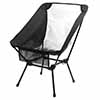
Lightweight Portable Camping Chair
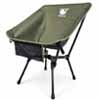
Low Back Folding Camping Chair
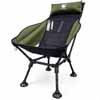
High-Back Pillow Chair
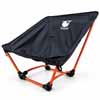
Compact Folding Camping Chair
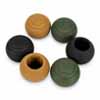
Spherical Replacement Foot
All products above are from the FEISTEL Camping Chair catalog. Specifications are manufacturer-published, not
For beach lounging we start with preferred posture, seat height and sand support. For fishing we give additional attention to upright seating, ease of standing and the possibility of wet or uneven ground. For a campsite we ask about tables, transport distance, tent space and storage. The same product may serve more than one activity, but we avoid claiming that one model is optimal in every scenario.
For mixed travel, we suggest setting priorities in order: safe support, appropriate body fit, comfortable task posture, acceptable carrying weight and maintainable materials. If the beach is only an occasional destination, a suitable versatile camping chair may be reasonable. If most use involves sitting on loose sand for long periods, a model developed specifically around those conditions may be a more direct fit.
FEISTEL’s company profile describes our work in outdoor product development, manufacturing, custom programs and quality control. In our article, we use that verified organizational background to explain how we think about seating requirements. We do not turn third-party field observations into invented FEISTEL experiment results, customer quotations or sales statistics. Where we have not published a model-specific test protocol or dataset, we describe an engineering principle or a recommended validation method instead.
Our public company profile states that we cover incoming material review, production-process oversight, finished-product inspection and shipment preparation. For a custom chair program, we advise buyers to agree on technical drawings, sample acceptance criteria, necessary test standards, critical dimensions and an inspection plan before bulk production. These steps help turn a visual concept into a consistent manufactured product.
If a customer asks for quantified sand resistance, repeated folding endurance or a particular corrosion result, we believe the responsible answer is to define the test, sample count, method, loading and acceptance threshold first. We can discuss such requirements as part of sourcing and development; they should not appear in marketing as completed achievements unless the underlying records exist and support the precise statement.
As an OEM/ODM supplier, we encourage importers and outdoor brands to specify the application, seat geometry, desired frame and fabric, branding, packaging and target market requirements. A beach-focused private-label project may need more attention to foot design and salt-related maintenance; a hiking-focused project may prioritize packed dimensions and mass. These priorities influence technical and commercial decisions from the beginning.
Customization should not be treated as merely a logo change. Altering tubes, connectors, seat dimensions or accessories can change loading, production complexity and usability. We suggest prototype review and a clear approved sample, by an agreed inspection approach. Any minimum order quantity, lead time, price or specific certification should be confirmed for the current project rather than borrowed from a different product page.
We also recommend documenting labeling, use instructions, maintenance guidance and destination-market requirements. These details help buyers communicate realistic expectations to end customers and reduce misunderstandings about capacity, terrain compatibility and outdoor care.
The first mistake is choosing by category name alone. “Beach chair” does not guarantee ideal sand performance, and “camping chair” does not mean the product is unsuitable for beaches. The second is comparing only weight or price. Those figures do not describe seat fit, support stability or manufacturing details. We recommend considering the complete specification rather than one prominent headline number.
Another mistake is interpreting published capacity as proof of performance under every kind of motion or surface. Leaning, abrupt loading and uneven support can alter stresses. Similarly, buyers should not assume that “aluminum” means no cleaning is necessary or that “600D” establishes a particular number of years of service. Our product advice emphasizes operating conditions and documentation.
After beach use, we advise removing loose sand before closing the frame so abrasive grains are less likely to remain in connectors and folds. Follow the model-specific cleaning instructions; where appropriate, remove salty residue from accessible surfaces and let the fabric and hardware dry before prolonged storage. Avoid harsh cleaning methods unless the manufacturer explicitly permits them.
We also recommend inspecting feet, tubes, fasteners, seams and hinges for unusual wear or damage. An outdoor chair with a visibly deformed frame or insecure connector should not remain in service without assessment. For commercial users, routine inspection intervals and a replacement procedure can be more useful than an unsupported promise of indefinite product life.
Can you use a camping chair on sand? Yes, if the individual chair is suitable for the conditions; examine ground-contact area and stability. Are all beach chairs low? No, designs vary. Is aluminum completely rust-proof at the coast? No material choice removes the need to check finishes, connections and care instructions. Will wider feet always prevent sinking? Not necessarily; sand conditions and chair loading still matter.
Which is better for reading at the beach? A supportive, suitably reclined design may work well, provided it is stable. Which is better for dining? An upright seat with an appropriate table relationship may be easier. Are ultralight chairs necessarily weak? No; evaluate published capacity together with the construction and its testing basis. Can buyers customize FEISTEL chairs? Our site presents OEM and ODM services, with final options subject to project confirmation.
How should a retailer choose among several models? Start with user groups and use cases; compare exact size, fabric, frame, feet, packaging and maintenance. Ask for samples and relevant documents when needed. We prefer a clear application-specific recommendation over a generalized “best chair” claim that cannot account for individual requirements.
Our conclusion is simple: neither camping chairs nor beach chairs win in every situation. Beach-oriented seating can be valuable for low, relaxed postures and suitable sandy-ground support. General-purpose camping seating can offer flexibility across campsites, travel and events. We encourage buyers to verify the exact product’s footprint, seat dimensions, transport requirements and material specifications before deciding.
For retailers, importers and private-label outdoor brands, FEISTEL can be a starting point for comparing lightweight, low-back, high-back and adjustable camping chair configurations. Explore our published collection, review the linked product pages, and contact our team for current samples, specification confirmation and OEM/ODM discussions. We believe transparent specifications and fit-for-purpose design create more lasting value than unsupported superlatives.
We invite outdoor retailers, importers and brand owners to explore our current product catalog and discuss application-specific requirements with our team. Product availability, specifications, customization and testing scope should be confirmed for each inquiry.
카테고리
브랜드 : 안휘 FEISTEL 공장 관련제조 : OEM & ODM 상품명 : 야외활동에 적합한 가볍고 작은 접이식 피크닉 테이블입니다. 내구성이 뛰어난 소재로 제작되어 휴대가 간편하고 설치가 쉽습니다.
상표 : 안후이 파이스텔 공장 제조업과 관련 : OEM 및 ODM 제품 : 맞춤형 경량 금속 철 접이식 문 의자는 야외 캠핑에 이상적인 내구성 있는 지지력과 편안함을 제공하며, 휴대하기 편리한 소형 디자인으로 운반 및 보관이 간편합니다.
브랜드 : 안휘 FEISTEL 공장 관련제조 : OEM & ODM 제품 : 야외 휴대용 접이식 롤업 피크닉 테이블: 가볍고 내구성이 뛰어난 알루미늄 디자인으로 높이 조절이 가능하고 설치가 간편하며 캠핑, 피크닉, 야외 활동을 위한 컴팩트한 운반용 가방이 있습니다.
브랜드 : 안휘 FEISTEL 공장 관련제조 : OEM & ODM 상품명 : 다리 높이 조절이 가능한 다용도 휴대용 IGT BBQ 캠핑 테이블입니다. 야외 요리, 캠핑, 피크닉에 이상적입니다. 가볍고 접을 수 있어 휴대가 간편합니다.
브랜드 : 안휘 FEISTEL 공장 관련제조 : OEM & ODM 상품명 : 캠핑, 해변, 야외활동에 적합한 컴팩트하고 가벼운 알루미늄 접이식 테이블입니다. 휴대하기 쉽고 튼튼하며 음식과 음료를 담는 데 이상적입니다.
상표 : 안후이 파이스텔 공장 제조업과 관련 : OEM 및 ODM 제품 : 이 캠핑용 접이식 나무 라운지 의자는 튼튼한 프레임, 인체공학적 리클라이닝 디자인, 컴팩트한 접이식 구조를 갖추고 있어 해변, 캠핑장 또는 뒷마당에서 휴식을 취하기에 완벽합니다.
상표 : 안후이 파이스텔 공장 제조업과 관련 : OEM 및 ODM 제품 : 이 야외용 접이식 알루미늄 프레임 캠핑 의자는 조절 가능한 등받이와 가볍지만 견고한 디자인을 자랑하며, 캠핑, 해변 여행, 피크닉, 야외 휴식에 휴대하기 편리하고 편안함을 제공합니다.
상표 : 안후이 파이스텔 공장 관련 제조 : OEM 및 ODM 제품 : 등산 및 배낭여행용 미니 의자는 내구성이 뛰어난 옥스퍼드 원단으로 접이식 디자인을 갖추고 있으며, 독창적인 필통 주머니가 있어 캠핑과 야외 활동에 휴대성, 편안함, 실용성을 제공합니다.
상표 : 안후이 파이스텔 공장 제조업과 관련 : OEM 및 ODM 제품 : 도매 하이킹 장비 여행용 침대는 높이 조절이 가능한 접이식 캠핑용 침대로, 튼튼한 지지력, 간편한 휴대성, 야외 모험을 위한 편안한 휴식을 제공합니다.
브랜드 : 안휘 FEISTEL 공장 관련제조 : OEM & ODM 상품명 : 내구성이 뛰어난 프레임, 손쉬운 설치, 여행에 편리한 운반 가방을 갖춘 배낭 여행에 적합한 야외용 초경량 싱글 콤팩트 휴대용 접이식 캠핑 침대입니다.
연결 상태를 유지하자 :